


The U.S. 250th anniversary is here, and family members have been asking me, “Did we have anybody in the Revolution?”
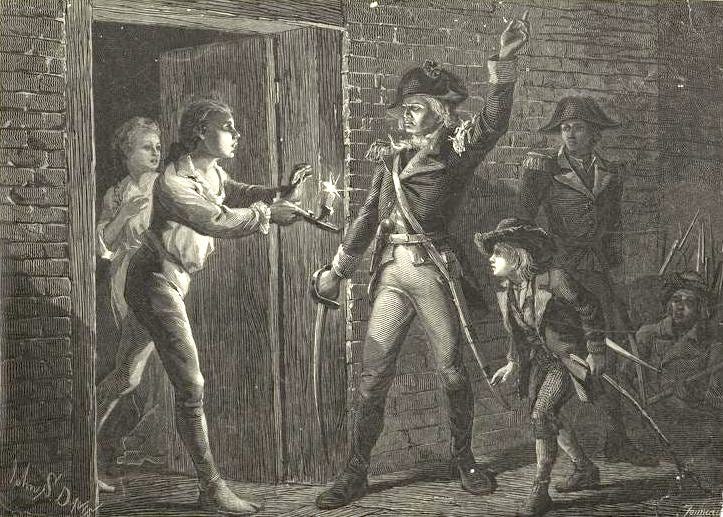
Ethan Allen
My dad’s family has deep New England roots, so the answer is definitely yes, but I wanted to entertain my cousins with a good story. So I started where a lot of Vermont family stories start: Ethan Allen.
I didn’t expect to prove we were related to him. But if your ancestors lived in early Vermont, Ethan Allen is the famous name. The Green Mountain Boys, Fort Ticonderoga, Benedict Arnold back when he was merely annoying and not yet a national synonym for betrayal.
Our ancestors lived in Poultney, Vermont, and at some point I downloaded an old local history with noble intentions and then ignored it, which is one of my more reliable research methods.
So a few weeks ago I opened it looking for Ethan Allen. And yes, my Ashley and Brookins ancestors were clearly associated with Allen. I got my information together and prepared to impress one of my grandkids.
My granddaughter looked at me and said, “Ethan who?”
Oh boy.
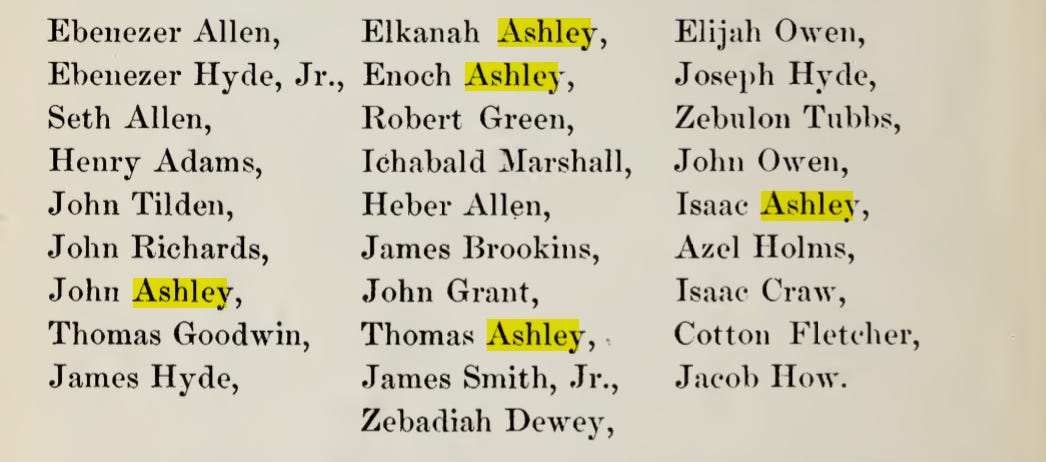
The Ashley Brothers
Apparently Ethan Allen is not quite the household name I had hoped.
To be fair, she knows plenty of useful things. Her upcoming class schedule includes anatomy, physiology, and several other science-y selections.
But when I explained that 7th great-uncle Thomas Ashley was right behind Ethan Allen at the taking of Fort Ticonderoga in 1775, she still looked politely unconvinced.
Yes, Grandma, I’ll make this video with you. But is it really all just about forts and soldiers?
She didn’t say that, but her face did. So I showed her the story I found during my research. Old town histories can be a bit dry, but if you poke around, you may uncover stories hidden below the lists of names and facts.
The Women and Children
This is the story about what everybody else was doing while the men were off fighting. After the Battle of Hubbardton, word reached the women of Poultney that British soldiers were on their way. All the men were still gone, so the women needed to grab their kids and leave. Now.
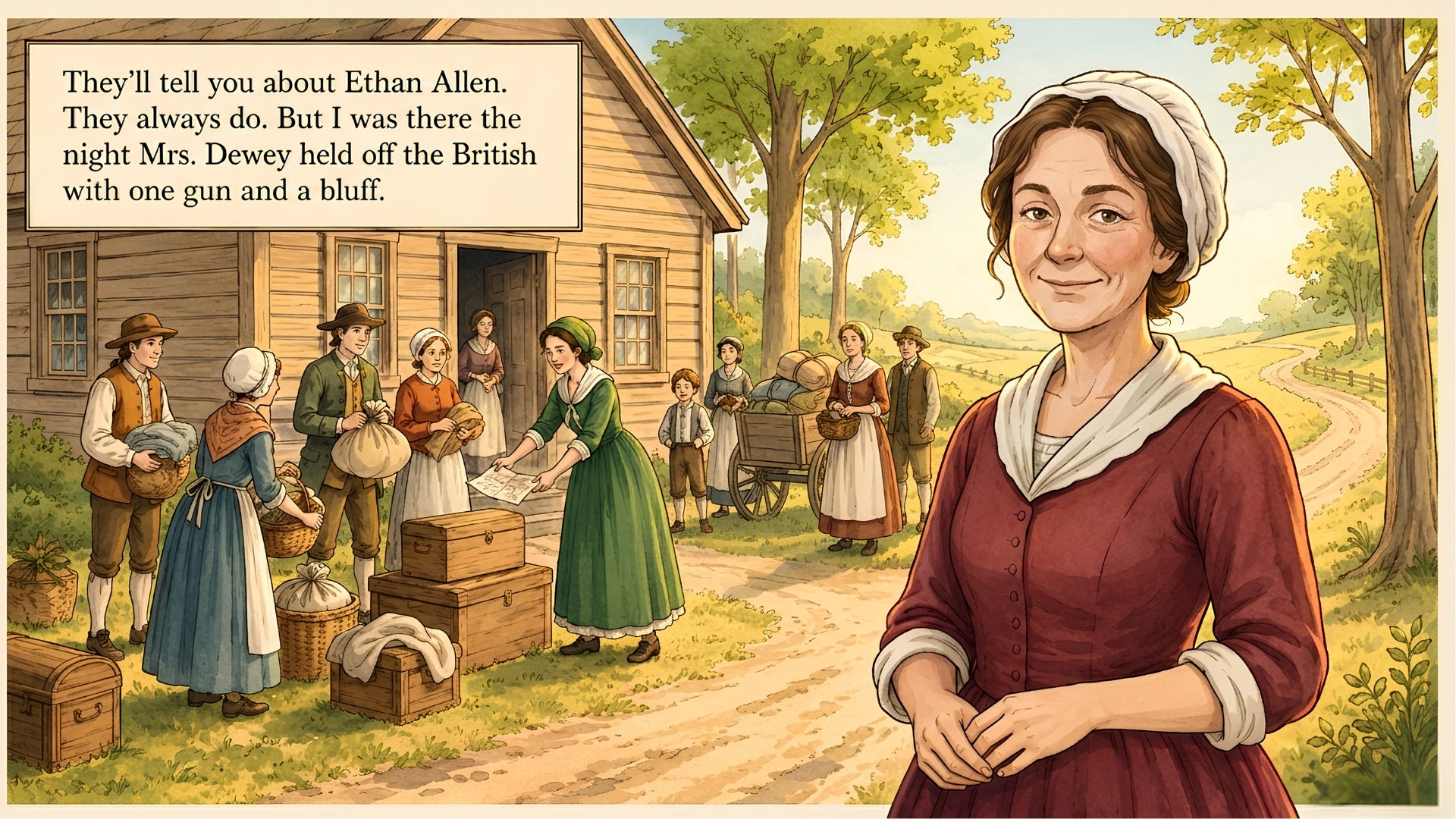
As the story goes, 13 women and their children set out through the wilderness. Their de facto leader was Beulah Dewey, the local midwife, and apparently a take-charge sort of woman.
Some of the women had as many as nine children on this journey. Mrs. Dan Richards walked the whole way carrying a baby and leading a toddler. They had at least one horse with them, maybe more, but the book authors say they believe most were on foot.
The group traveled south, away from where the British soldiers were headed. On the way they encountered a Tory-leaning landlady who claimed she had no bread for the children. They also spent the night in a meeting house and awoke to hear footsteps outside. British soldiers? Marauders? They didn’t know, but Mrs. Dewey devised a plan to scare them away, as you’ll see in the video.
I generally put these videos on YouTube, and you’re welcome to pop over there, but I’m also putting a copy here for convenience.
A Few Notes
A note about the use of AI here. I did not label each AI image individually, because the illustrated scenes are plainly ai-generated. Public domain images from Wikimedia are labeled in the video itself.
Was AI necessary in order to help my grandkids relate to the story? No, that’s just a hobby. What I do think helps a lot, though, is finding ways to compare and contrast. This is what they did then. It is similar to this thing we do now.
In the video I gloss over some of the details about The Green Mountain Boys. That was a device to keep momentum. If you want to read more about them, just type “Green Mountain Boys” into your favorite search engine. And if you had ancestors in Poultney in the early 1770s, they were probably involved.
Where to Find the Book
The story of the Poultney women is fascinating on its own, and you can read the original versions in A history of the town of Poultney, Vermont, from its settlement to the year 1875, with family and biographical sketches and incidents by Joseph Joslin, Barnes Frisbie, and Frederick Ruggles. https://archive.org/details/historyoftownofp1875josl
The story is told more than once in the book in various forms. It clearly turned into a town legend, being told and retold. I pulled the book into NotebookLM and asked it to compare all versions of the story and show me where the details disagreed. The main difference seems to be exactly which thing happened at which tavern, which makes sense when a story is retold many times.
My impression is that the taverns were what other books have called “ordinary houses”, serving as both restaurant and hotel. Or, as my granddaughter got me to put in the video: 1777 Airbnb.
Happy Independence Day to those of you in the U.S. And here’s a question to take with you today. Our history books always make the Patriots out as the “good guys” in the Revolution. But it’s really a lot more complicated than that. 250 years ago, what direction would your loyalty have leaned: Tory, or Whig?
A note for my Hubbard and Parks cousins: If you can trace your history back through Edmund Hubbard and Cynthia Jane Parks, then these ancestors are yours. They came from Connecticut and Massachusetts for the most part. Most of the men are listed in Revolutionary war records. Often they were “minute men” who served for short stretches of time in local conflicts.
Fort Ticonderoga is one of my top places to recommend visitors to our longtime favorite summer vacation spot, Lake Placid. It’s not far away and it’s a fascinating piece of history. The earthworks are still visible as you approach. Of course being Team France I like to refer to it as “Carillion.”
Interesting post and great video!